


Over the past few years the majority of my sellers sold their homes and moved to states like Texas, Kentucky, and Florida which was consistent with overall migration trends statewide. While Denver’s population is still growing, the sources of that growth have shifted, which is important for anyone considering buying or selling a home in Denver.
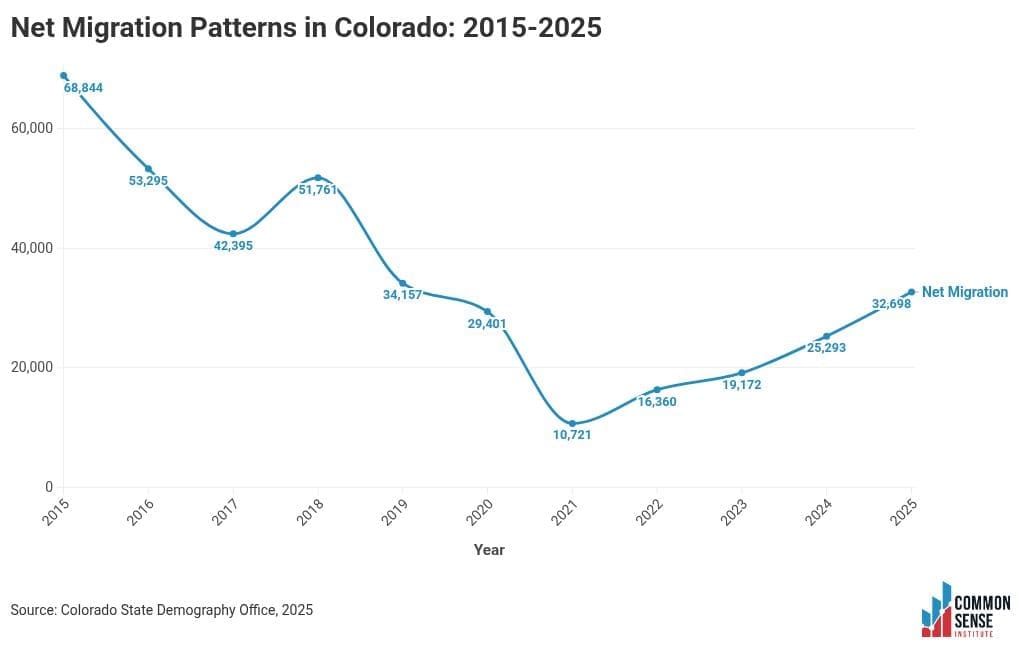
Recent data shows that domestic migration into the Denver metro area has slowed significantly. A 2025 report from the Common Sense Institute found that net migration into Colorado has decreased by 52.5 percent compared with 2015. In the Denver–Aurora–Lakewood Metropolitan Statistical Area, net domestic migration has declined by 66 to 70 percent over the past decade. In numbers, where approximately 44,000 people moved to metro Denver in 2015, that figure dropped to around 13,000 by 2025. Analysts point to rising housing costs and affordability challenges as key reasons for the decline.
At the same time, Denver’s population continues to grow due to international migration and natural population increase (births minus deaths). Between 2020 and 2024, the metro area added approximately 82,000 residents, with around 56,500 coming from international migration and 46,000 from natural growth. While domestic in-migration has slowed, these factors continue to drive demand in Denver housing.
What This Means for Denver Homeowners
Sellers in Denver need to adjust their expectations to match the current market realities. Today’s buyers are more discerning, and the pool of out-of-state buyers is smaller than it was a decade ago. Key considerations include:
- Focus marketing efforts on local buyers, nearby suburbs, and relocating families within Colorado rather than assuming a large influx of domestic buyers from other states.
- Price homes competitively. Affordability and value are now more important than luxury finishes alone.
- Highlight features that appeal to current buyers, such as move-in readiness, proximity to good schools, community amenities, and walkability.
- Recognize that demand still exists, but it is coming from a smaller, more targeted group, including international migrants and growing families.
Well-priced, well-maintained, and move-in-ready homes are likely to attract attention even in a market with slower in-migration.
Denver Population and Migration Trends 2020–2025
While migration has increased since the mass exodus we saw during the Covid lockdown era, it’s still below the highs of 2015. Below is a snapshot of the key population and migration trends in the Denver–Aurora–Lakewood metro area:
Are you thinking of making a move?
The Denver Metro real estate market appears to be transitioning from a period of rapid growth to a more stable phase. Population growth is still occurring, but at a slower pace, and housing demand is increasingly shaped by local dynamics rather than migration alone.
Homes that are well-positioned in desirable neighborhoods are likely to remain in demand, and overall, the market is shifting toward steady, long-term growth rather than rapid increases in volume and price. Sellers moving to Texas, Florida, Oklahoma, and Kentucky over the past few years reflect these broader migration patterns and help explain some of the shifts in Metro Denver’s housing market.
Stay informed on the latest trends in the Denver housing market. Subscribe to our weekly updates and get expert insights delivered straight to your inbox, helping you make confident decisions whether you are buying, selling, or tracking the market.