

Drive past South Santa Fe and Mineral Avenue and you will spot the vacant lot anchoring the new RiverPark development. Right now it is just a patch of dirt next to South Platte Park Open Space. But Peyton Manning and a powerhouse Denver restaurant group want to change that. If they get their way, 1st Street Farms Littleton becomes the most ambitious hospitality project south metro has seen in years.
What Is 1st Street Farms Littleton?
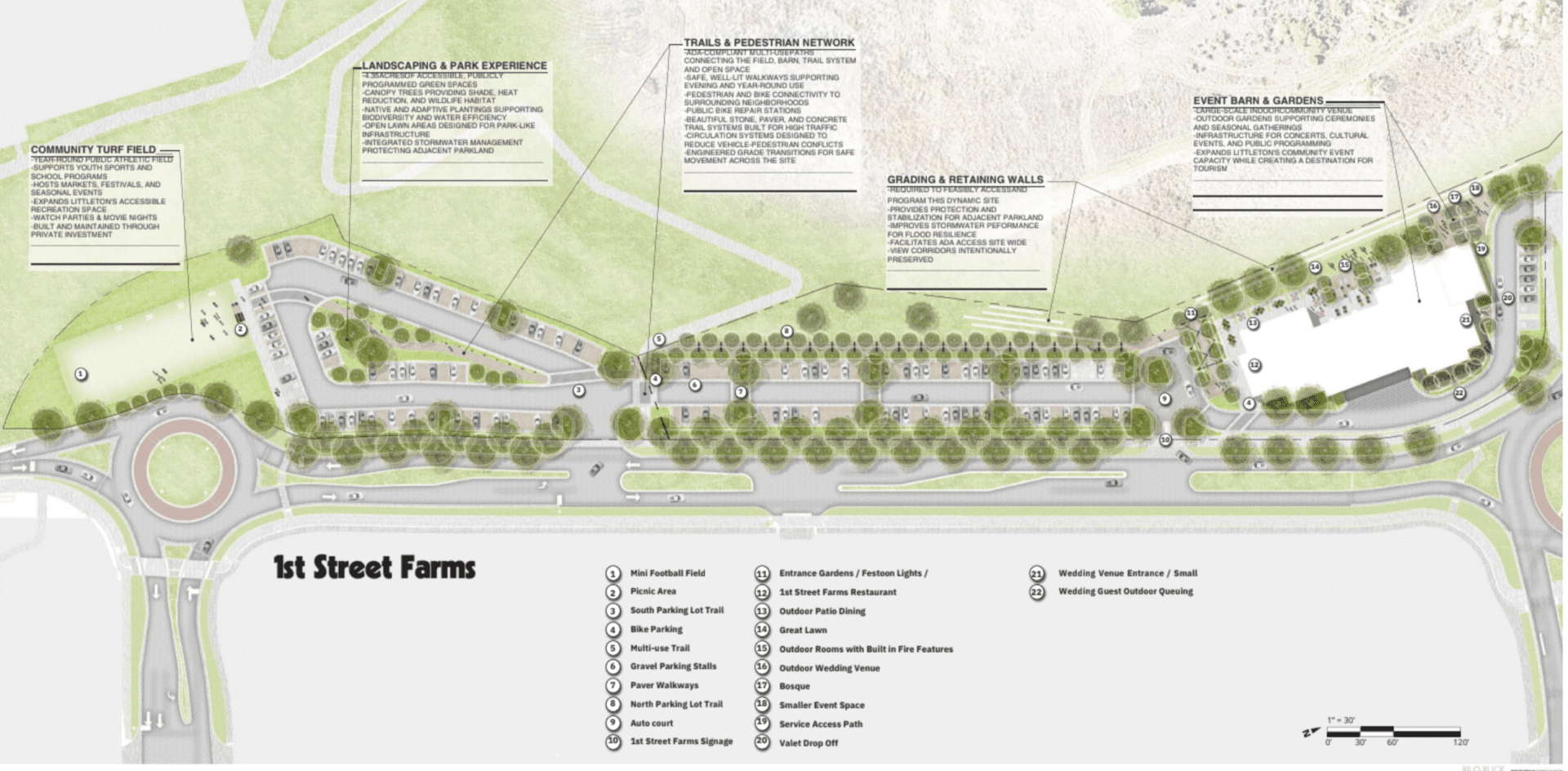
The creators behind 1st Street Farms Littleton are not opening another suburban restaurant. They are pitching a 5-acre, farmhouse-style lifestyle destination. Think neighborhood hub built to last 50 to 100 years. The conceptual plans show three major components.
First, the restaurant. A 15,000-square-foot flagship eatery with a Southern-inspired, Colorado-rooted menu. Manning’s ties to New Orleans and his college days at Tennessee show up in the concept — high-end comfort food with Rocky Mountain ingredients.
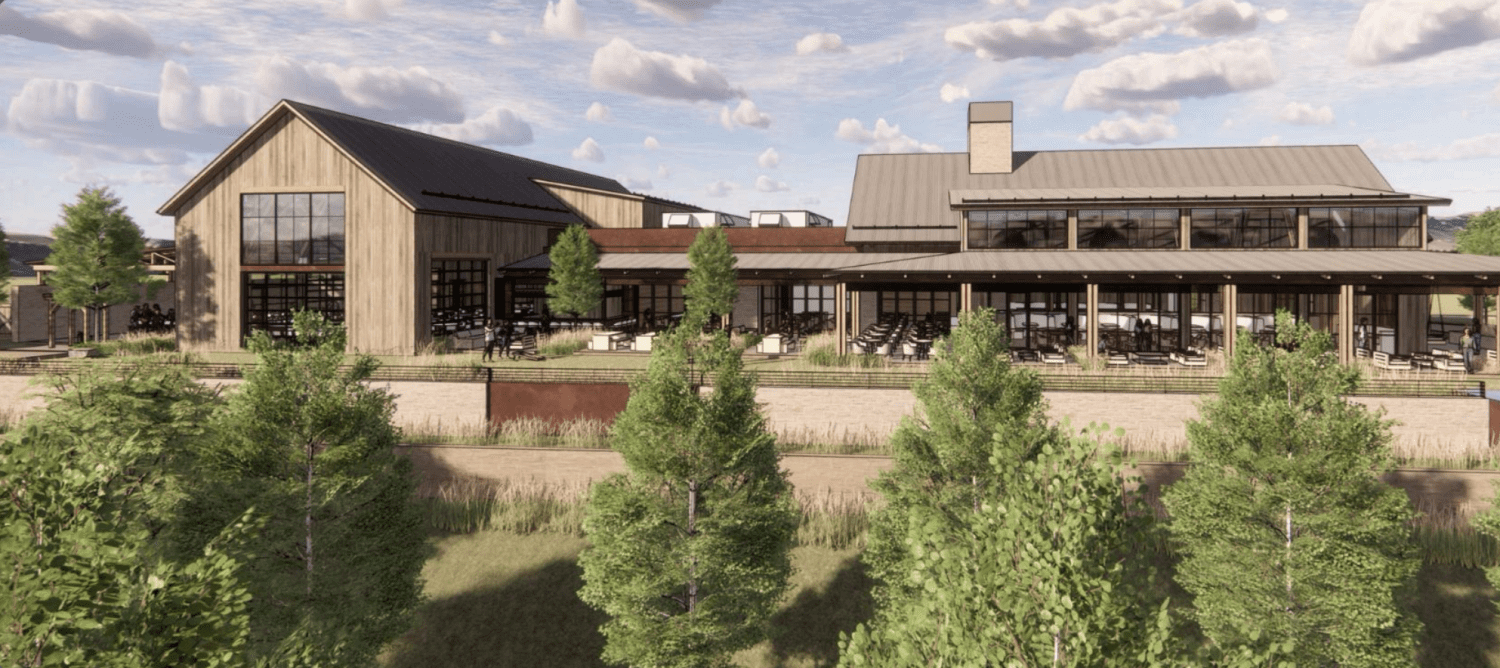
Second, the Field House. A 13,000-square-foot glass-enclosed event barn that hosts up to 450 guests year-round. Farmers markets, corporate events, weddings, community festivals — all under one roof.
Third, a public turf football field for youth sports. Five acres of walking paths, gardens, and direct trail connections surround it.
That trail connection matters. The site sits right next to South Platte Park. That park already links to the broader trail system that makes Littleton so attractive. A development adding green space and trail hookups — not just more rooftops — protects neighborhood character.
Who Is Behind 1st Street Farms?
Denver-based Gastamo Group runs the operational side. You know their restaurants: Park Burger, Homegrown Tap and Dough, Perdida, Lady Nomada. They build neighborhood institutions, not chains that flame out.
And yes, Peyton Manning is legitimately attached. He is not flipping burgers in the kitchen. He is a minority equity partner and the designated founder. His name, image, and promotional reach will market and activate the destination. For a city like Littleton that thrives on community identity, that commitment carries real weight.
Why Some Locals Are Pushing Back
A massive new park and restaurant sounds like a win on paper. But the project hit a roadblock at City Hall. Soaring costs left Gastamo Group with a $5.5 million funding gap. They asked the city for help: a $4 million forgivable loan, $650,000 in waived land fees, and $1 million in sales tax breaks over five years.
The request sparked immediate backlash. Critics called out the irony: everyday taxpayers subsidizing a project backed by ultra-wealthy groups and a multi-millionaire athlete. Local restaurant owners flagged unfair competition. Why should a massive new rival skip sales taxes when they cannot?
The city’s independent economic analysis tells a different story. If 1st Street Farms Littleton walks away, that land reverts to its original zoning — roughly 270 townhomes. City staff say residential projects typically lose money for the city. Services cost more than the property taxes bring in. By contrast, 1st Street Farms projects over $35 million in annual economic impact. The city stands to collect $750,000 a year in sales tax by year six.
In a recent study session, City Council pushed back. They cut the upfront loan to $2 million and demanded a bigger share of long-term sales tax revenue. That $2 million comes from accumulated development use taxes — not the general fund or public safety budgets.
What This Means for Littleton Real Estate
From a real estate perspective, I am watching this closely. A destination this size at South Santa Fe and Mineral puts a spotlight on the entire south Littleton corridor. RiverPark is already reshaping the area. The Front Range Passenger Rail station planned at Mineral adds another layer. If 1st Street Farms gets built, neighborhoods in 80120 and 80128 will see more demand from buyers who want walkable lifestyle amenities. That tracks with what I am already seeing in the April market report.
The alternative is 270 more townhomes on that parcel. More housing supply is not bad. But townhomes do not create the community draw a destination project does. Either way, this corner of Littleton is changing. If you own property nearby or want to buy in the area, pay attention now.
Want to know how this affects home values in your neighborhood? I am happy to pull the numbers. Get a quick estimate through my home valuation tool. Browse current Littleton homes for sale. Or check out my local resources page for more on what is happening across the area.
If you’re buying or selling in the Littleton or Denver Metro area and want a straight conversation about what’s happening in the market